You want to grow your money but do not know where to start. Every investment option seems complicated and risky. You are losing money to inflation by keeping it in savings.
Investment strategies help you grow wealth systematically. They turn savings into income-generating assets. Finding the best investment strategies for beginners helps you build long-term financial security.
This guide covers proven investment approaches for new investors. We look at different asset classes, risk management, and portfolio building. Let’s start investing wisely.
Key Takeaways
- Understand different investment options available.
- Learn how to manage investment risk.
- Discover beginner-friendly investment strategies.
- Find out how to build a diversified portfolio.
- Get tips for long-term wealth building.
- Learn common investment mistakes to avoid.
Why Investing Matters
Investing builds wealth over time.
Investing Benefits
| Benefit | Impact |
|---|---|
| Wealth growth | Beat inflation |
| Passive income | Earn while you sleep |
| Financial security | Build retirement fund |
| Compound returns | Money grows faster |
Investment Options
Different investments suit different goals.
Popular Investments
- Stocks: Ownership in companies
- Bonds: Loans to governments or companies
- Mutual funds: Diversified portfolios
- ETFs: Traded index funds
- Real estate: Property investments
Beginner Strategies
Start with simple, proven approaches.
Strategy Options
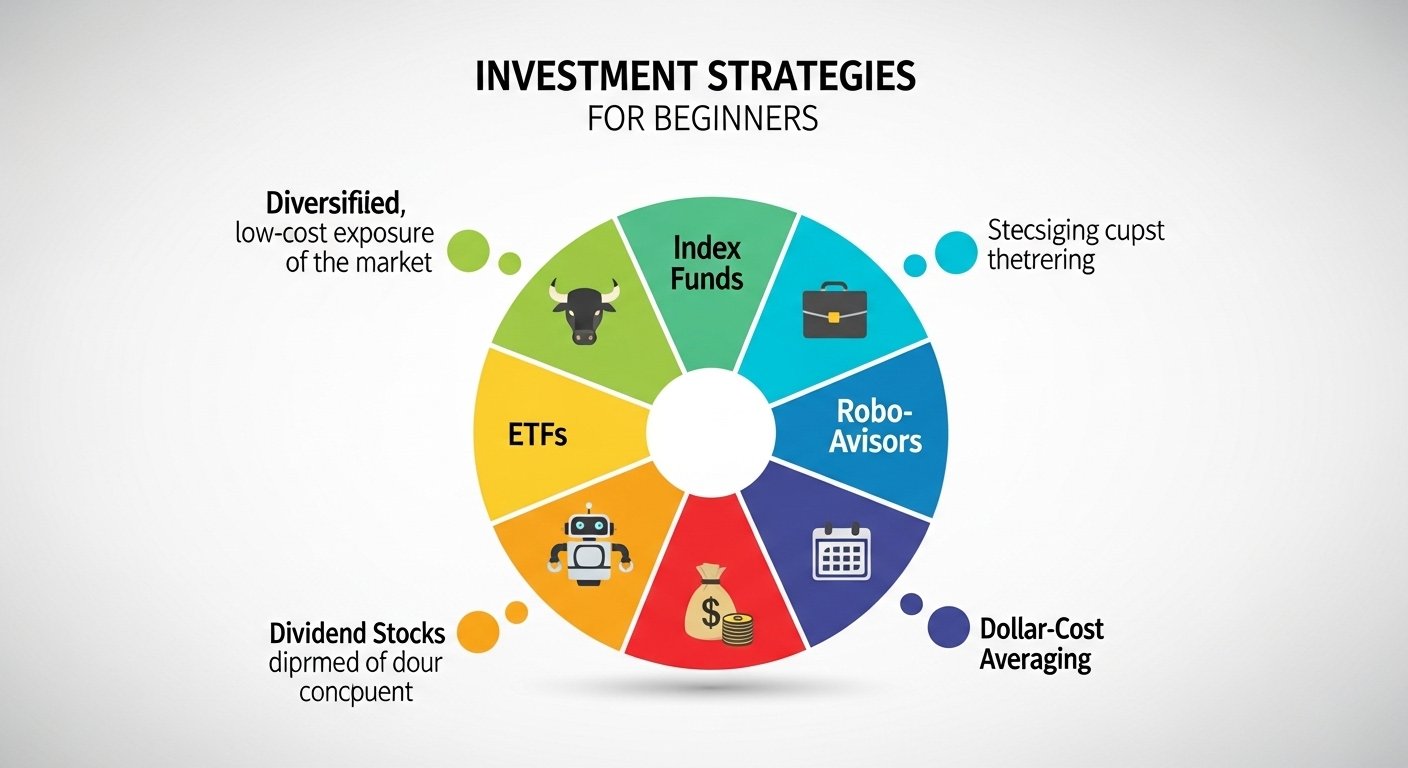
- Index investing: Buy market indexes
- Dollar-cost averaging: Invest regularly
- Target-date funds: Automatic rebalancing
- Dividend investing: Earn regular income
Risk Management
Protect your investments from losses.
Risk Tips
- Diversify across asset classes
- Invest for the long term
- Only invest what you can afford to lose
- Rebalance portfolio regularly
Conclusion
Finding the best investment strategies for beginners helps you build long-term financial security. Good investing turns savings into wealth.
Start by understanding different investment options. Choose strategies that match your goals and risk tolerance. Invest regularly and stay patient.
Investing is an investment in your financial future. Start investing wisely today.
FAQ
What is the best investment strategy for beginners?
Index investing is often best for beginners. It provides diversification and low fees. Dollar-cost averaging reduces timing risk. Target-date funds offer automatic rebalancing. Start with simple strategies and learn as you go.
How much money do I need to start investing?
You can start investing with as little as $50-100. Many brokerages have no minimum requirements. Robo-advisors accept small amounts. The key is starting early and investing regularly. Even small amounts grow significantly over time through compound returns.
What are common investment mistakes?
Trying to time the market. Not diversifying investments. Investing money you need soon. Panic selling during market drops. Not starting early enough. Paying high fees for active management. Chasing hot stocks or trends.
How do I manage investment risk?
Diversify across different asset classes. Invest for the long term to ride out volatility. Only invest money you will not need for years. Rebalance your portfolio regularly. Understand your risk tolerance before investing.
Should I invest in stocks or bonds?
Most investors should own both stocks and bonds. Stocks offer higher growth potential but more volatility. Bonds provide stability and income. Younger investors can hold more stocks. Older investors should hold more bonds for stability.
What are common investment mistakes?
Trying to time the market. Not diversifying investments. Investing money you need soon. Panic selling during market drops. Not starting early enough. Paying high fees for active management. Chasing hot stocks or trends.