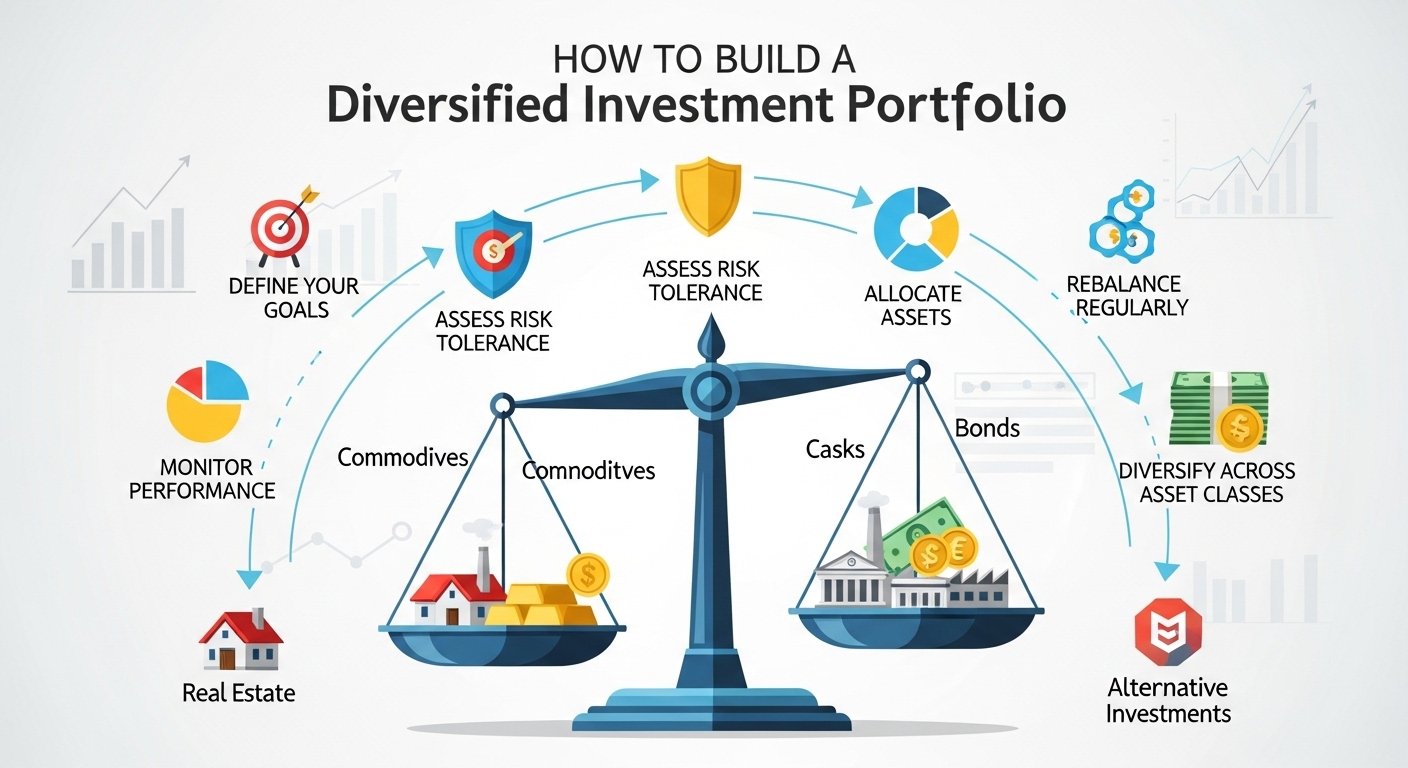
You put all your money in one stock and lost everything. Your investments are not protected from market crashes. You are taking too much risk with your portfolio.
Diversification spreads risk across different investments. It protects your portfolio from market volatility. Learning how to build a diversified investment portfolio helps you achieve steady returns while managing risk.
This guide covers portfolio diversification strategies for investors. We look at asset allocation, rebalancing, and risk management techniques. Let’s diversify your investments.
Key Takeaways
- Understand why diversification matters.
- Learn how to allocate assets effectively.
- Discover different investment categories.
- Find out how to rebalance your portfolio.
- Get tips for managing portfolio risk.
- Learn common diversification mistakes to avoid.
Why Diversification Matters
Diversification reduces risk and smooths returns.
Diversification Benefits
| Benefit | Impact |
|---|---|
| Risk reduction | Lower portfolio volatility |
| Steady returns | Consistent performance |
| Downside protection | Limit losses in crashes |
| Peace of mind | Less stress investing |
Asset Allocation
Spread investments across different asset classes.
Asset Classes
- Stocks: Growth potential with higher risk
- Bonds: Stability and income
- Real estate: Property investments
- Cash: Safety and liquidity
- Commodities: Inflation protection
Portfolio Rebalancing
Maintain your target allocation over time.
Rebalancing Tips
- Review portfolio quarterly
- Sell overweight assets
- Buy underweight assets
- Rebalance when allocation drifts
Risk Management
Protect your portfolio from losses.
Risk Tips
- Set stop-loss orders
- Use position sizing
- Monitor correlations
- Stay disciplined during volatility
Conclusion
Knowing how to build a diversified investment portfolio helps you achieve steady returns while managing risk. Good diversification protects your investments from market volatility.
Start by understanding different asset classes. Allocate investments based on your goals and risk tolerance. Rebalance regularly to maintain diversification.
Portfolio diversification is an investment in your financial security. Start diversifying your portfolio today.
FAQ
How do I diversify my investment portfolio?
Spread investments across different asset classes like stocks, bonds, and real estate. Diversify within each asset class by investing in different sectors and regions. Use index funds or ETFs for easy diversification. Rebalance your portfolio regularly to maintain target allocation.
What is the ideal asset allocation?
Ideal allocation depends on your age, goals, and risk tolerance. A common rule is to subtract your age from 100 to get stock percentage. Younger investors can hold more stocks. Older investors should hold more bonds. Adjust based on your specific situation and goals.
How often should I rebalance my portfolio?
Rebalance quarterly or when allocation drifts significantly from targets. Some investors rebalance annually. Others rebalance when any asset class moves more than 5% from target. Choose a schedule that works for you and stick to it consistently.
What are common diversification mistakes?
Owning too many similar investments. Not diversifying within asset classes. Ignoring international investments. Over-concentrating in one sector. Not rebalancing regularly. Chasing hot investments instead of maintaining allocation.
How many stocks should I own?
Owning 20-30 stocks provides good diversification. Fewer than 15 stocks increases risk. More than 50 stocks may not add much benefit. Index funds offer instant diversification with hundreds of stocks. Choose based on your ability to research and monitor investments.
What are common diversification mistakes?
Owning too many similar investments. Not diversifying within asset classes. Ignoring international investments. Over-concentrating in one sector. Not rebalancing regularly. Chasing hot investments instead of maintaining allocation.