You want to invest but do not know which funds to choose. Every fund option seems complicated and risky. You are paralyzed by too many choices.
Mutual funds pool money from many investors to buy diversified portfolios. They offer professional management and instant diversification. Finding the best mutual funds for beginners helps you start investing easily.
This guide covers top mutual fund options for new investors. We look at different fund types, how to choose, and building a portfolio. Let’s invest in mutual funds.
Key Takeaways
- Understand why mutual funds work for beginners.
- Learn different mutual fund types.
- Discover how to choose the right funds.
- Find out how to build a fund portfolio.
- Get tips for successful mutual fund investing.
- Learn common mutual fund mistakes to avoid.
Why Mutual Funds Work
Mutual funds simplify investing for beginners.
Mutual Fund Benefits
| Benefit | Impact |
|---|---|
| Diversification | Spread risk |
| Professional management | Expert selection |
| Accessibility | Low minimums |
| Convenience | Easy to buy |
Fund Types
Choose funds that match your goals.
Fund Categories
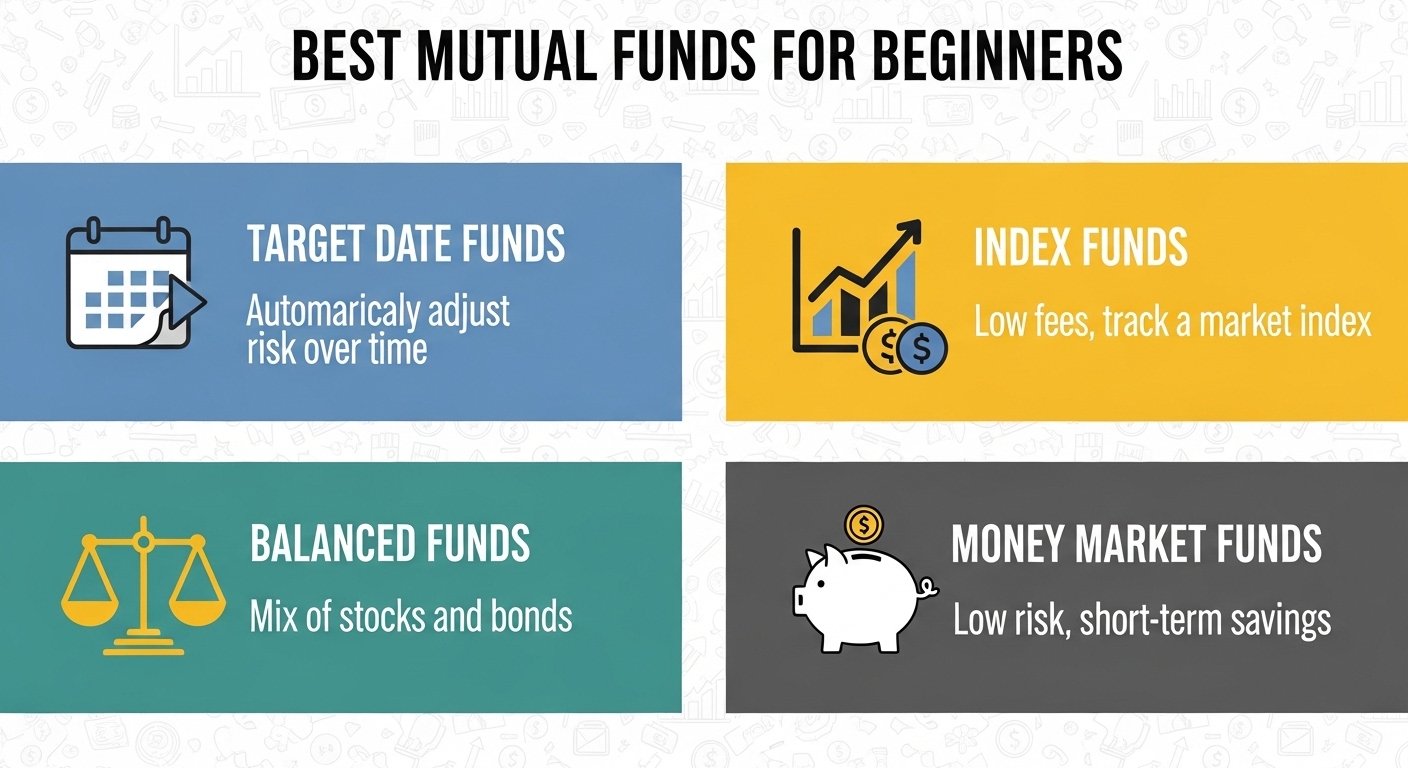
- Index funds: Track market indexes
- Target-date funds: Automatic rebalancing
- Bond funds: Fixed income
- Stock funds: Growth potential
Choosing Funds
Select funds based on these factors.
Selection Criteria
- Low expense ratios
- Strong track record
- Appropriate risk level
- Good fund company
Building a Portfolio
Create a diversified fund portfolio.
Portfolio Tips
- Start with index funds
- Add target-date funds
- Diversify across types
- Rebalance annually
Conclusion
Finding the best mutual funds for beginners helps you start investing easily. Good funds provide diversification and professional management.
Start with low-cost index funds. Add target-date funds for simplicity. Build a diversified portfolio over time.
Mutual fund investing is an investment in your future. Start investing in mutual funds today.
FAQ
What are the best mutual funds for beginners?
Index funds are best for beginners due to low costs and diversification. Target-date funds offer automatic rebalancing. Look for funds with expense ratios below 0.20%. Choose funds from reputable companies like Vanguard or Fidelity.
How do I choose mutual funds?
Consider your investment goals and risk tolerance. Look for low expense ratios. Check the fund’s track record over 5-10 years. Choose funds from reputable companies. Diversify across different fund types.
What are common mutual fund mistakes?
Choosing funds based on past performance alone. Paying high expense ratios. Not diversifying across fund types. Trying to time the market. Not rebalancing regularly. Chasing hot funds.
What is an index fund?
An index fund tracks a market index like the S&P 500. It provides broad diversification at low cost. Index funds typically outperform actively managed funds over time. They are ideal for beginners due to simplicity and low fees.
How much should I invest in mutual funds?
Start with what you can afford, even $50-100 per month. Increase contributions over time. Aim to save at least 15% of income for retirement. Use automatic investments to stay consistent.
What are common mutual fund mistakes?
Choosing funds based on past performance alone. Paying high expense ratios. Not diversifying across fund types. Trying to time the market. Not rebalancing regularly. Chasing hot funds.